
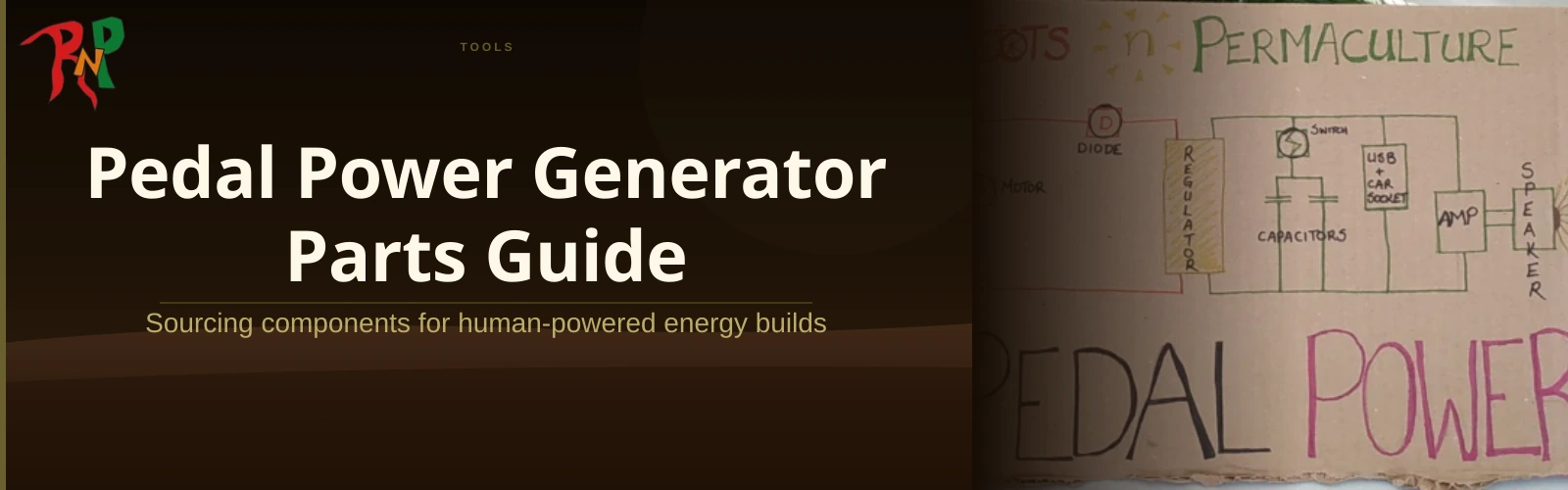
Pedal Powered Generator Parts and Sourcing Guide
This resource supports course organisers in sourcing components for building pedal powered generator systems. It combines a live parts list with practical guidance to help you adapt the build to your context.
Pedal powered systems offer a hands on way to explore energy, effort, and appropriate technology. Rather than prescribing a single design, this guide supports a range of build options depending on how you want to use the system.
Live Parts List
The table below shows the current parts list, including indicative pricing and components. This version is regularly updated to reflect availability and cost changes.
Note: I am not recommending specific suppliers. The links included are simply from sites that tend to keep items consistently listed, which makes them more reliable for planning. Always check locally and adapt based on availability.
How to Use This Resource
This is not a fixed kit list. It is a flexible tool to help you make decisions based on your course, budget, and intended use.
- Review the components to understand the system
- Choose build options that suit you and your budget
- Substitute parts based on local availability
- Prioritise essential components for your context
For course delivery, make your own copy of the spreadsheet and use it as a working checklist.
Core System Components
Mechanical Structure
Most systems start with a bicycle mounted in a fixed position. This can be a standard bike on a stand, or a repurposed exercise bike.
The focus is on stability, safety, and ease of use for participants.
Generator
A DC motor is typically used as the generator. When driven by pedalling, it produces electrical current.
The choice of motor affects how the system feels to pedal and how much usable energy is generated.
Drive System
Power is transferred from the pedals to the generator using a roller, belt, or chain system.
Simpler systems are usually more robust and easier to maintain in a teaching environment.
Electrical System
This includes wiring, connectors, and protection components to ensure safe and stable energy flow.
Keeping this visible during teaching helps participants understand how energy moves through the system.
Energy Storage
In most of my systems, energy is stored using super capacitors rather than batteries. This keeps the system simple, responsive, and well suited to short bursts of human power.
Batteries are only introduced in larger systems, where multiple bikes are connected and a more consistent energy supply is needed.
Choosing Your Setup
This parts list is focused on smaller systems used in workshops and events. Within that, there are still different ways you might want to use the system.
- Education and demonstration: a simple setup to show how energy is generated and to charge small devices
- USB charging: a practical system for charging phones and small electronics
- Sound system: adding a built in amplifier to power a small speaker setup
- Cinema setup: running a projector and sound for pedal powered film events
- Flexible system: a modular approach where different components can be connected depending on the event
Choose the options that match your needs rather than trying to build everything into one system.
Larger multi bike systems for bigger events are a separate setup. I will share a dedicated parts list for those once it has been tested through more courses.
Sourcing Strategy
Start Local
Prioritise second hand and locally available materials. Bicycles and structural components are often easy to source through reuse networks.
Use the Spreadsheet as a Guide
Treat listed components as reference points rather than fixed requirements. Equivalent parts will often work just as well.
Plan for Substitution
Availability changes, so build flexibility into your sourcing.
Prepare Spares
Small items such as connectors, wiring, and fuses are worth having in reserve during a course.
Final Notes
A pedal powered generator is as much a teaching tool as it is a technical build. The aim is clarity, participation, and learning through doing.
Keep the system appropriate to your context, document what works, and refine it over time.
Take This Further
If you’d like to explore this in a more hands-on way, there are courses and workshops where we build and work with these systems in practice. If you don’t see a suitable date, feel free to get in touch to express interest or organise a session.
Upcoming Pedal Power Energy Course Dates
| No events |
Other Upcoming Courses
| 14 Jul 2026; 09:00AM - 06:00PM 12 to 17 day Urban - Vegan - Permaculture Design Course with an emphasis on Designing for Kids |